


Tear Off Napkins
Due to the modern fast-paced life, disposable cloth napkin is more and more popular.
Description
Your Leading Tear Off Napkins Manufacturer
Shaoxing Shining Textile Co.,Ltd: We specialize in cotton textiles for 20 years, providing safe, environmentally friendly and high-temperature-resistant cotton home textile products to global suppliers
100% Eco-Friendly
Our products are made of sustainable materials such as cotton, linen, etc., which is part of our green practices to shoulder social responsibility. These products are can be 100% recycled after use and won't last a lifetime in the landfill.
Customizable
We provide global customers with OEM&ODM services. We can offer our colors and patterns for customers to choose. Or the customer provides an idea and we implement it for you.
Wide Applications
All of our products are not only suitable for daily use, but also for holiday gatherings, weddings, parties, banquets, and restaurant operations.
Quality Assurance
We have passed BSCI, OEKO-TEX and other certificates. And our company has won the trust and support of customers all over the world with high-quality products and first-class after-sales service.
Tear off napkins
Due to the modern fast-paced life, disposable cloth napkin is more and more popular. People usually choose to directly lay disposable napkin or coasters flat under dinner plates and wine glasses. Tear off napkins brings us both beautiful and practical.
Unlike regular cloth napkins, disposable tear off napkins are more convenient and do not need to wash for be recycled. But it's more noble than the tissue.
Tear off napkins are a cross between regular cloth napkins and tissue, combining the best of both.
Advantage of Tear Off Napkins

1. Convenience
Easy to carry: Since paper towels are usually small and lightweight, they are very suitable for carrying around, whether at home, in the office, outdoors or traveling.
Disposable: They can be discarded immediately after use without washing or reuse, which greatly saves time and energy.
2. Hygiene
Disposable: Avoids the problem of bacteria and virus transmission that may be caused by reuse, thus ensuring higher hygiene standards.
No residue: No residue is left after using paper towels, such as oil stains or food residues that cloth napkins may leave, which helps keep the table or hands clean.
3. Environmental protection (under the premise of reasonable use)
Reduce water use: Compared with traditional cloth napkins, paper towels do not need to be washed with water, so the consumption of water resources is reduced to a certain extent.
Biodegradable: Many paper towels are made of biodegradable materials, which means that they can be decomposed by the natural environment after use without causing long-term pollution to the environment.
4. Economical
Buy in bulk: Paper towels are usually sold in bulk, which makes the purchase cost relatively low.
Versatility: In addition to being used as napkins, paper towels can also be used for a variety of purposes such as wiping tables, hands, cleaning small items, etc., which improves its cost-effectiveness.
5. Diversity
Diverse sizes: Paper towels are available in a variety of sizes, from small handkerchiefs to large kitchen towels, to meet different scenarios and needs.
Rich designs: Many paper towels also come with printed, embossed or special texture designs to increase their beauty and practicality.

6. Social and cultural acceptance
Wide acceptance: In modern society, paper towels have become a widely accepted daily necessity, and can be found everywhere, whether in homes, restaurants or public places.
Etiquette norms: In some cultures, the use of paper towels is seen as a polite and respectful act, especially in public places.
types of Tear Off Napkins
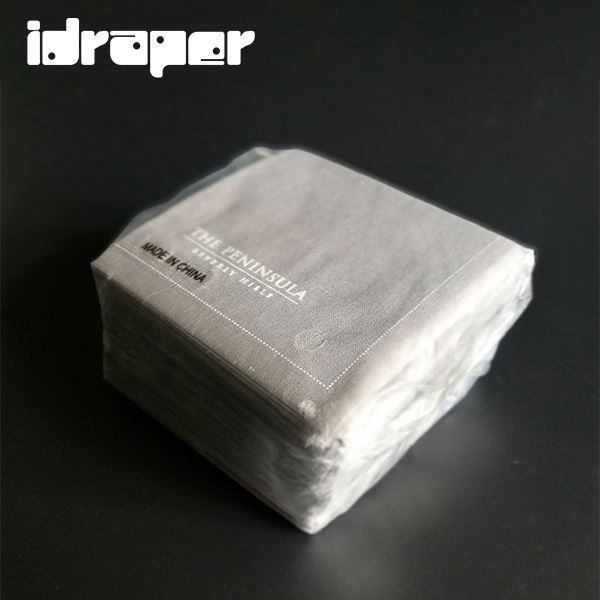
1. Classification by material
Paper napkins:
Advantages: Paper napkins are usually made of cellulose, with good water absorption and softness, suitable for wiping mouths and hands.
Disadvantages: Paper napkins may not be as durable as cloth napkins, and need to be discarded after use, which may have a certain impact on the environment.
Cloth napkins (although not usually called "tear-off", some cloth napkins may be designed as small pieces that can be torn off):
Advantages: Cloth napkins are usually more durable, can be reused, and have a softer and more comfortable texture.
Disadvantages: Need to be washed after use, which is relatively troublesome.
2. Classification by size
Small napkins:
Suitable for personal use, such as wiping mouths or hands.
Easy to carry, suitable for outdoor activities or travel.
Medium napkins:
Suitable for use when dining at home or in restaurants.
Enough to cover the entire face or for wiping larger stains.
Large napkins:
Usually used in commercial settings or large events.
Can be used to cover the tabletop or as a tablecloth.


3. Classification by function
Ordinary napkins:
Suitable for general dining occasions, mainly used for wiping the mouth and hands.
Oil-absorbing napkins:
With strong oil absorption ability, suitable for greasy occasions such as barbecue and fried food.
Waterproof napkins:
Can prevent moisture penetration to a certain extent, suitable for outdoor picnics or rainy days.
Decorative napkins:
With various colors and pattern designs, they can be used for decoration of festivals or special occasions.
4. Classification by packaging
Individually packaged napkins:
Each napkin is individually packaged for easy carrying and use.
Keep the napkins clean and hygienic.
Roll-type napkins:
The napkins are presented in roll form and can be torn to the required length when used.
Suitable for occasions such as home kitchens or restaurants where napkins are frequently used.
Boxed napkins:
The napkins are stacked in a box in multiple layers and can be pulled out one by one when used.
Boxed napkins are usually more stable and not easy to fall apart.


5. Classification by environmental protection
Degradable napkins:
Made from natural plant fibers, such as bamboo pulp, wood pulp, etc.
Can be decomposed by the natural environment after use, and will not cause long-term pollution to the environment.
Non-degradable napkins:
Made from plastic or other synthetic materials.
Not easily decomposed by the natural environment after use, and may cause long-term pollution to the environment.
Application of Tear Off Napkins

1. Home Application
Daily dining: When dining at home, tear-off napkins are convenient and quick, and can quickly meet the needs of diners to clean their hands or mouths.
Kitchen use: During the cooking process, tear-off napkins can be used to wipe ingredients, kitchen utensils or desktops to keep the kitchen environment clean.
Baby care: For families with babies, tear-off napkins are indispensable. They can be used to change diapers, clean hands or faces, etc.
2. Application in catering places
Restaurants: In restaurants, tear-off napkins are usually placed on the dining table for customers to use during meals. It not only improves the dining experience of customers, but also helps keep the restaurant clean.
Fast food restaurants: In fast food restaurants, tear-off napkins have become a must-have item due to the fast dining speed and high customer mobility. It can help customers quickly solve cleaning problems during meals.
Coffee shops: In coffee shops, customers may need napkins to wipe the mouth of the coffee cup or hands while tasting coffee. Tear-off napkins provide a convenient choice.
3. Application in public places
Office: In the office, tear-off napkins can be used to wipe the desktop, computer keyboard, etc. to keep the working environment clean. At the same time, it can also meet the cleaning needs of employees when they are eating or resting.
School: In school, tear-off napkins can be used in public places such as canteens and libraries for students to use. It helps to keep the school clean and hygienic.
Hospital: In hospitals, due to the extremely high hygiene requirements, tear-off napkins are often used to wipe hands, medical equipment or desktops. Its convenience and hygiene make it a must-have item in hospitals.

4. Application in outdoor activities
Tear-off napkins are also widely used in outdoor activities such as picnics and camping. It is easy to carry and can meet the needs of cleaning supplies in outdoor activities. At the same time, because its material usually has good water absorption and durability, it can play a good role in outdoor environments.
Process of Tear Off Napkins

1. Raw material preparation
Paper selection: According to the positioning and needs of the product, choose suitable paper as the raw material. Common paper types include wood pulp paper, recycled pulp paper, bamboo pulp paper, etc. These papers have their own characteristics in terms of softness, water absorption, durability, etc.
Paper cutting: Cut the selected paper into a width and length suitable for the production of tearable napkins. This step needs to ensure the accuracy of cutting and the flatness of the paper for subsequent processing.
2. Production and processing
Printing pattern: According to customer needs, print various patterns, texts or brand logos on the paper. This step usually uses environmentally friendly printing inks to ensure the safety and environmental protection of the product.
Embossed treatment: In order to increase the softness and feel of the tearable napkins, embossing treatment is usually performed. Embossing can form a certain texture and concave and convex feeling on the surface of the paper, which enhances the use experience.
Punching and winding: Punch holes at specific locations of the paper to form individual napkins that are easy to tear off. Then, the punched paper is wound into a roll shape for subsequent packaging and use.
3. Finished product inspection and packaging
Quality inspection: Quality inspection of the produced tearable napkins, including checking the softness, water absorption, durability of the paper, and clarity of the pattern printing. This step is an important part of ensuring product quality.
Packaging and labeling: The tearable napkins that have passed the inspection are packaged, usually sealed with plastic film or paper bags. At the same time, the product label is affixed to the package, including product name, specifications, production date, shelf life and other information.
Warehousing and delivery: The packaged tearable napkins are stored in the warehouse and shipped according to order requirements. Before delivery, the quantity and packaging of the products need to be checked again to ensure the accuracy and completeness of the delivery.
4. Environmental protection and sustainability
In the process of producing tearable napkins, attention should also be paid to environmental protection and sustainability. For example, choose renewable paper raw materials, use environmentally friendly printing inks, and reduce waste emissions during the production process. These measures help reduce the environmental impact of products and enhance the social responsibility of enterprises.


who choose us?
Shaoxing Shining Textile Co., Ltd. is a company integrates industry and trade .
We focusing on cotton textiles for 20 years to supply safe and environmentally friendly cotton textiles for global customers.
To provide customers with R & D, production, import and export services;
To provide customers with disposable cotton napkin one-stop solution.
Company has a superb team who devote themselves to providing the best possible quality and service. Our every worker has more than 10 years experience. We trust expertise and professional integrity are keys to its rapid progress.
The company has established a win-win relationship with our customers as a result of the joint efforts from the team members and the global buyers.
one-stop solution
professional team
high quality


FAQS
Q: How to use a paper napkin?
Q: How to sanitize napkins?
Q: What is napkin etiquette?
Q: What are disposable napkins made of?
Q: What are cotton napkins used for?
Q: How do you wash cotton napkins?
Q: Do cotton napkins wrinkle?
Q: How do restaurants get their napkins so white?
Q: What is the best color for napkins?
Q: Should your napkins match your tablecloth?
Q: Where is the best place to put napkins?
The napkin always goes to the left of the dinnerware... ...
Place your flatware in the order they will be used, with the items that will be used first on the outside.
Forks go to the left of the plate, and knives and spoons go on the right.
Q: Why use cotton napkins?
Q: Does anyone use tablecloths anymore?
Q: Where do you place your napkin once you've finished eating?
Q: What are the things to avoid when using table napkin?
1. Do Not Tuck the Napkin into Your Collar
2. Do Not Use the Napkin to Clean Cutlery or Dishes
3. Do Not Place a Used Napkin on the Table During the Meal
4. Do Not Wave or Gesture with the Napkin
5. Do Not Ball Up the Napkin
Q: What to look for when buying napkins?
Q: How do you wash cotton cloth napkins?
Q: What is the tablecloth trick?
Q: What is the best color for napkins?
Q: Should napkins be same color as tablecloth?
Q: Where is the best place to put napkins?
The napkin always goes to the left of the dinnerware... ...
Place your flatware in the order they will be used, with the items that will be used first on the outside.
Forks go to the left of the plate, and knives and spoons go on the right.
Q: What type of cotton is best for napkins?
Hot Tags: tear off napkins, China tear off napkins manufacturers, suppliers, Cloth Napkins Roll, Disposable Cotton Cocktail Napkins, Soft Cotton Napkin, Gingham Cloth Napkins, Plaid Cloth Napkins, Cocktail Napkin
Send Inquiry
You Might Also Like


